Lisa Catallo on Experiencing Burnout, The Power of Pivoting to Find Your Path, and Guiding Women to Build Thriving Group Practices
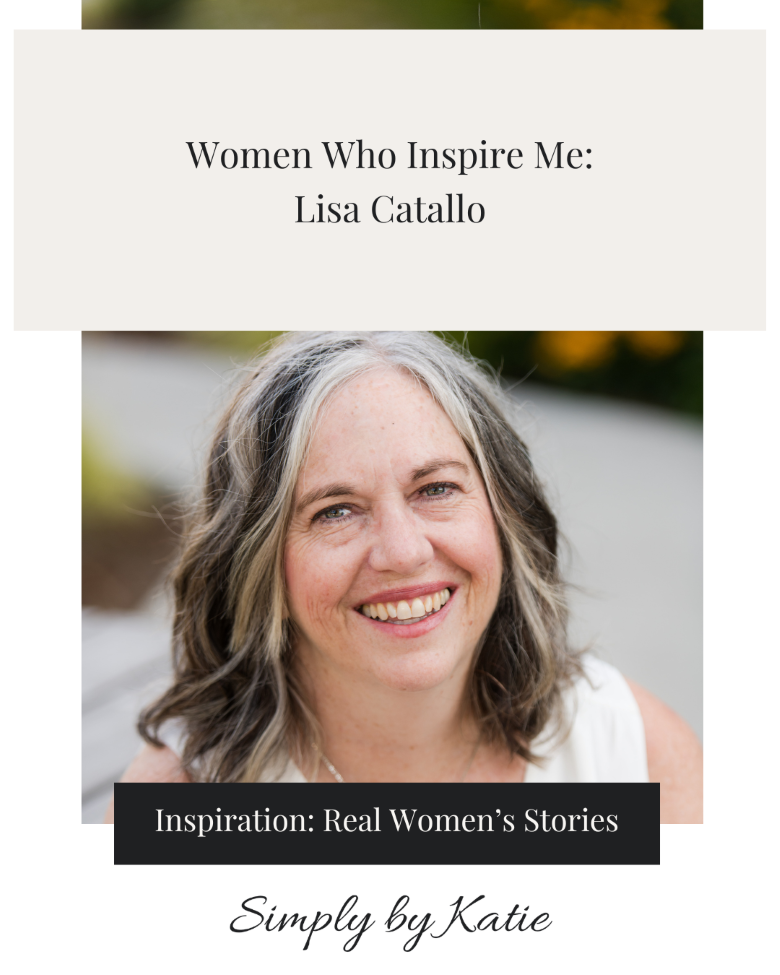
Women Who Inspire Me: Lisa Catallo
I met Lisa and knew that her story had to be added to the Women Who Inspire Me series. One thing that I am so passionate about is sharing our experiences as women building something for ourselves. I think that there is so much wisdom in being able to both hear someone else's story and then also share our own stories.
What seems like something only we are struggling with is actually something that many women go through.
When we have goals for ourselves that are outside of our roles - mother, partner, daughter, granddaughter - it’s nice to have a space where we can see that it’s ok to build a life for ourselves that doesn’t require more work or sacrifice.
This is where I would like to introduce Lisa. Lisa is a registered clinical counsellor in Surrey, BC and the founder of Group Practice Network, an online space for Canadian Therapists to grow their own thriving group practice. What I loved about this conversation was Lisa’s openness about her own journey to building a business that she is passionate about and how she got her master's in counselling at the age of 50 after a major life transition. These are the stories that every woman needs to hear more often, because I truly believe that at any time in your life, you are empowered to make a change.
This is Lisa’s story.
From Walking the Stage With her Master's degree in Hand to Building a Group Practice
Can you share a bit about your journey, the path that led you to where you are today, and the moment that really changed things for you?
If you would have told me when I was in my 20s that I would be entrepreneurial, I would have thought that you were talking to the wrong person. It definitely wasn't even something that was modelled to me as I grew up or something that was on my radar.
The one thing I always knew was that I wanted to help people, and I wasn't really sure how that would happen.
Then I went through a divorce, and during that time I had an amazing counsellor who helped me with a whole range of things that I was going through. From that experience, I knew that's what I wanted to do.
It took me a while to get there, because I was also navigating being a single mom for a while. The timing all worked out in my second marriage, when my husband at the time was bought out of his business, and we decided that this was the time that I would go to school and make it all happen.
So I went, and I got my master's in counselling psychology. It was a pretty cool experience because the week after I turned 50, I crossed the stage with my master's degree in hand.
From there, I knew I wanted to be in private practice, but I didn't know what it took to get clients to fill my practice.
I always half-joke that when I was starting out, I thought, “Ok, I'm a counsellor now, so everybody's gonna find me, and the magic out there in the world is going to send people my way”.
And I learned that’s just not how it works.
I also had a dream to build a group practice, but I wasn't really sure how I would build it out. At that point, I made the decision that I wanted to be a part of something, and I was ok to help somebody else grow their practice.
So I joined a group practice. She was just starting out, and it became evident pretty quickly that I was not the right person for her practice. I was very excited about the entrepreneurial side of the business. I was passionate and wanted to try different things and learn along the way. I found out right away that she did not have that same vision, and so I left to start my own private practice.
Being in private practice, I found that being behind a door all the time and not having anybody around felt very isolating. I always say that in private practice, your world gets small. And then as a group practice owner, it gets even smaller.
I started a group practice with someone I had gone to school with. We started with subleasers because we didn't know what we were doing, and we were finding our footing as we built.
I dove right into that experience. I learned what I could by reading books, talking to people who have gone before me and then taking some of the things that worked for them and adapting them to my practice. I really honed in on what I needed to know as an entrepreneur during this time.
There's so much you have to know that is not taught when you go for your master's in counselling or psych, and in most other master’s programs. For example, how to run a business is something that you don’t learn in your training.
I started reaching out to people, looking online for trainings to join as I was building. I was finding that, at the time, there wasn't really anything for Canadians who were starting a clinic.
I knew that this was something that I not only wanted to learn for myself, but I wanted to help people grow their own group practices. I was looking for another source of income because it felt like the group practice side of things was more gradual.
I was 50 when I started, right? So automatically, there's a shorter runway for success, and I was the main breadwinner in my household. That added extra pressure to make money and provide for my family as I was also growing my practice.
My group partnership ended during COVID. It was another case of I really wanted to go in one direction, and she wasn't necessarily in alignment with where I wanted to go. That’s when I started Panorama Wellness Group.
I grew the practice over five years. We went from three of us to opening two locations, with about 20 of us between subleasers, contractors, and admin employees.
In that growth, I recognized that I was burning out.
I was trying to do two businesses at once. When I started Panorama, I had a business coach, and I remember he told me that I had to focus on one or the other.
My response was, " Watch me”, but ultimately he was right. I was also going through a divorce, and it was actually someone else who pointed out to me that maybe I was experiencing burnout.
I didn't have the words for that at the time, and I recognized that I just couldn't keep doing both. I had to choose which one to focus on, and I really loved the coaching side of things.
So I decided to downsize the group practice last year, and that took about a year to do. I've got a good mix now. It feels like I'm in a good spot. I love the coaching side of things. I’m having a lot of fun helping other people grow their group practice and make it fit for them.
I think a lot of times we lose touch with what we actually want for our business and ourselves. We get caught up with what we see on social media or comparing ourselves against what society expects us to do or what we see other people doing.
I run a free Facebook group, and there are people from all different ranges in there. Sometimes I see people in there who have multiple locations and are making a whole bunch of money, then there are other people that have one contractor. I think to run a successful practice, you need to not set your goals on what somebody else has, but really know what it is that you want and need, and that's ok to do.
That’s my real sweet spot: helping people step into that leadership role. For a lot of us, we don't like to lead, or we're scared to stand out or say, "This is what you need to follow.” The one thing that I want group practice owners to know is that people came to your practice because of what you have created.
And so maybe that's because of your personality, or your values, or your vision. They are there to follow you; they need you to lead. What they don't need you to do is try and be all nice and friendly and act like your peers.
What they are looking to you for is direction. They want to see the vision of what you are creating together, and they want to know what it looks like to work for you.
And it's ok to do that. It's healthy to do that.
For example, I had a coaching session recently, and my client said to me, “I'm really working on the mindset of, I'm not just a clinician, I'm a leader,” and being able to see some of those lights go off for her is pretty cool because it’s setting her up to lead well.
When you've got good systems in place, and you have created a business that's working for you rather than you working for it, it creates fluidity and freedom for everybody involved, not just you.
Recognizing Burnout and Getting Clear on What You want to Build
What’s something you’ve learned along the way that you wish every woman knew, or a mindset, tool, or practice that’s helped you step into your full potential?
Lisa Catallo: I took a trip to Costa Rica, and I look back and just think about how I pretty much flew there on autopilot. I had so much going on in life. I had all these big decisions to make, and I was very unaware of what was going on around me. Things just felt heavy. I had a travel agent book the tickets, and I just followed exactly everything that she told me to do to get there. It was on that trip that it was named for me that I was experiencing burnout.
There was this moment when I was walking on the beach, and I experienced clarity and lightness for the first time in a long time. I was still deciding if I was staying in my marriage. I was still deciding what to do with the group practice. I still had all those things, but I was able to step back and say to myself, “Ok, I’m burnt out. What do I need to do?”
Backtracking a little bit, when I was in school, I had an ethics class where we had to do a project on ethics as a therapist, and a few people did their project on self-care. At the time, I thought to myself, “That’s not ethics; why are you doing that?”
Fast forward to being in Costa Rica, and I had this lightbulb moment where, yes, it is ethical, because if you're not taking care of yourself, you can't then take care of everybody else around you.
I was teaching that to my clients, but I wasn't absorbing that myself. So I started asking myself, well, how do I take care of me? Because if I'm burnt out, I’m not going to be able to put the things in place that I need to build my business successfully, and I'm not going to make wise decisions from that perspective.
It's been two years of people asking me, so, what do you want? And for the longest time, the answer was, “I don't know what I want”.
And so I just had to start to describe what I wanted to help it all unfold for me. Because if you don’t know what you want, how are you going to achieve it?
Katie Eberman: I completely agree with you, the same has happened for me. Once I started to take baby steps and define just small things that I wanted to create for my life, only then did the bigger picture become clear for me. But I think that when we are in uncertainty and don’t have clarity, we are scared to even start to talk about what we do want because what if we get disappointed.
Guiding Women to Step into Leadership and Grow Thriving Group Practices
When women work with you, what's the most common thing that they're coming to you with? Is it burnout, is it more of identity shifts, or is it a little bit of everything?
Lisa Catallo: Women are often past all the excitement of creation, and now they have to maintain what they’ve built.
They are finding themselves without systems and are the ones that everyone goes to for answers. Sometimes they find themselves in a situation where they are wearing all of these hats, and they are starting to resent the people who work for them because they get to go home and not think about the business, or they're making more money than they are despite working so hard.
A lot of the work we do is about putting systems in place to help with some of that mental load, coaching around stepping into the leadership role. We also start to understand what it is that they want from their business and define how to make it work for them, instead of them working for the business and being ok with that.
What's also happening in our industry is when you’re in a Facebook group, for example, or if you talk to contractors, often, they'll say, “Well, they're taking all this money from me. Or, the split is just so high, and it's cutting into my income.”
And there is a disconnect because they’re not recognizing everything that goes into creating a space where they can come in and use their skills to see clients.
You have to pay whether you're on your own or in a group practice. When you're in a group practice, it's very obvious how much is going out for those costs.
The other piece is around valuing yourself enough to say, "This isn't working for me”, and to look at the actual numbers that the business needs and what you need to make it more sustainable moving forward.
Working through the identity piece is a big part of it, because you're no longer just a practitioner; you're a leader. And some still choose to stay a practitioner; however, when you start to lead your business, you are making the decisions. Whether creating a new system or approving a new cost that is coming in, you're in the driver's seat.
Katie Eberman: I feel like that's a big mindset shift, just as women in general, because for example, when we step into motherhood, there's a disconnect. We get used to taking care of everyone around us. We can run a tight ship at home, and we don’t get paid. Yet, when we then step into a paid role using that same skillset, that gap can feel huge.
Lisa Catallo: And I think that also applies to women who are private practitioners, because your world gets small. And then as a group practice owner or small business owner, not everybody understands what it takes to run a group practice, or build a business.
So now, not only is my role at home to take care of everybody, but as a counsellor, I'm also supposed to take care of everybody, and I'm being told that my business should work for me and I should be selfish.
How do we wrap our minds around that? And nobody can completely understand that path unless they’ve experienced something similar.
For me, a lot of the work I do is not just about leadership; it’s about identifying how you feel, and knowing that you're not alone.
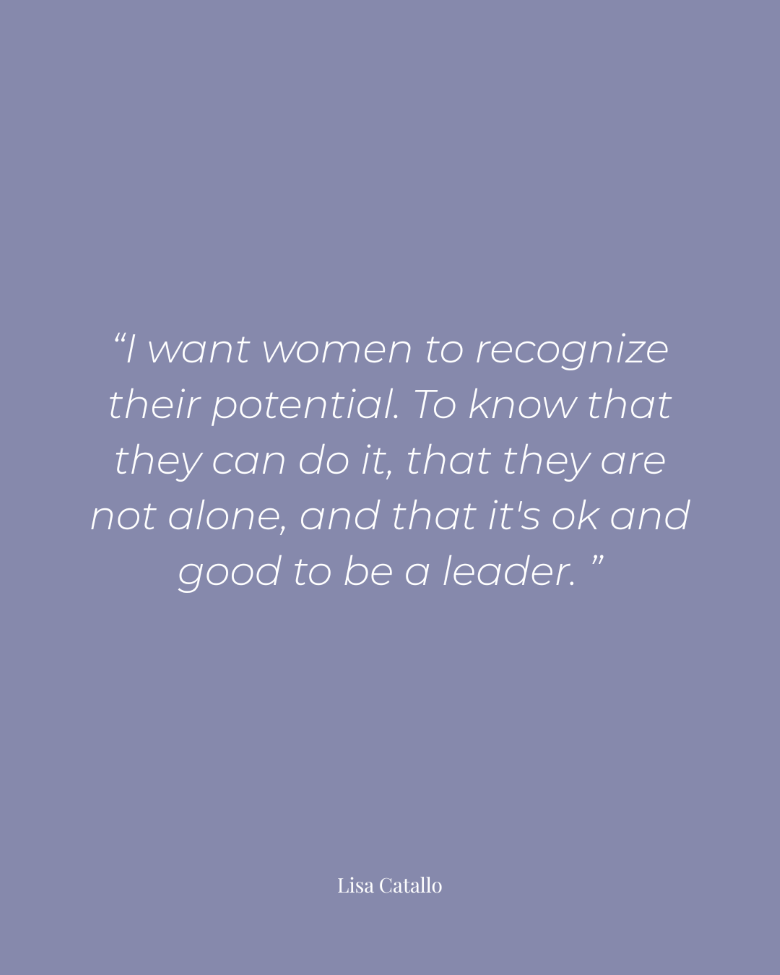
Having community and being in connection is an important part of my work, and is one of the reasons retreats and a membership are a big part of what I offer. I want women to recognize their potential. To know that they can do it, that they are not alone, and that it's ok and good to be a leader.